How to Learn Roller Skating as an Adult

 Words by
Keith Walker
Words by
Keith Walker
Why Roller Skating Feels Different as an Adult
Kids spend most of their day moving without thinking about movement itself.
- They balance.
- They shift directions.
- They fall.
- They recover.
- They repeat.
Most adults move very differently than they did when skating was part of everyday life.
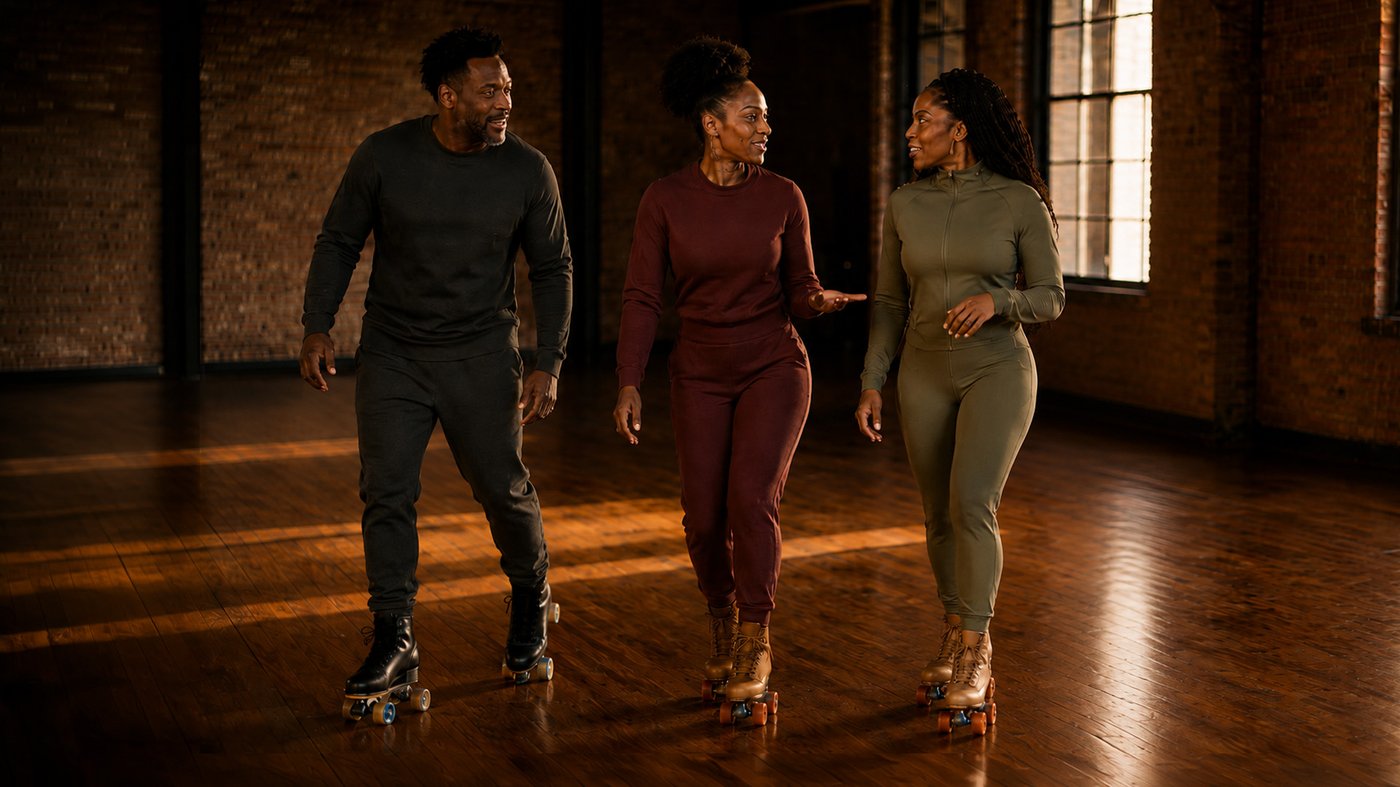
That is why roller skating can feel unfamiliar at first even for adults who exercised regularly or skated years ago. Roller skating pulls on rhythm, coordination, posture, balance, side-to-side movement, and weight transfer all at the same time. Even adults who are physically fit are often surprised by how different roller skating feels from traditional workouts because skating depends on movements most people simply do not repeat often anymore.
The body usually remembers more than people expect.
It just takes repetition for those movement patterns to settle back in again.
Adults also approach movement differently than children.
Children usually move first and think second. Adults tend to observe movement more carefully before committing to it. That awareness is not a problem. It simply changes the pace of progression.
That is why foundational skating skills matter.
- Standing properly.
- Balancing comfortably.
- Controlled falling.
- Stopping.
- Gliding.
- Turning.
Before movement comes balance.
Before style comes rhythm.
Most adults returning to roller skating progress more smoothly when they focus on one skating skill at a time instead of trying to do everything immediately.
Roller Skating Equipment for Adult Beginners
The internet tends to overcomplicate beginner skating gear.
Most adults returning to roller skating need less than they think.
Roller Skates
Most adults learning recreational roller skating or rink skating are best served by quad roller skates. The wider wheelbase gives more stability while balance and rhythm develop.
Fit matters more than price.
A skate that shifts while rolling creates instability and interrupts progression. A skate half a size too big makes every other problem worse because the foot cannot stay connected to the movement underneath it. If your foot moves inside the boot while skating, the skate does not fit correctly.
If possible, get fitted in person instead of guessing online sizing. Across Metro Detroit, many adult beginner skaters start at Anime To Skateboards before returning to the floor because proper fit changes the entire skating experience.
A solid beginner roller skate usually ranges between $90 and $180.
Less expensive skates often create unnecessary problems for beginner skaters. More expensive skates are usually designed for experienced skaters who already understand their skating preferences, wheel setups, and skating style.
Roller Skating Safety Gear
- Knee pads.
- Wrist guards.
- A helmet.
All three matter.
Wrist injuries are one of the most common beginner skating injuries for adults because the natural instinct during a fall is to catch yourself with your hands. Knee pads help support progression while controlled falling becomes more natural.
Most adults gradually adjust the amount of gear they wear as confidence, rhythm, and control develop over time. Wrist guards remain one of the most useful pieces of equipment throughout the beginner stage, especially while rebuilding balance and stopping control.
Foundational Roller Skating Skills
Skipping foundational skating skills usually creates gaps that have to be corrected later.
Most adults who return to skating successfully spend more time building control than trying to skate fast immediately.
Controlled Falling
This is one of the first foundational skills developed inside Skate Basics.
Controlled falling allows the body to stop reacting to every small loss of balance. Once that happens, movement usually becomes smoother, more relaxed, and more consistent because the body stops treating every shift in movement like an emergency.
Controlled falling is not about crashing. It is about recovery.
Standing on Roller Skates
Before movement comes balance.
- Feet shoulder-width apart.
- Knees soft.
- Weight centered over the foot.
Everything else builds from here.
A lot of beginner roller skating issues actually begin with posture and stance long before movement starts.
Balancing in Place
Lift one foot, then the other with control.
This develops the weight transfer roller skating depends on. Most beginner skaters do not realize how much roller skating is built around learning to trust one foot at a time.
Gliding
Push from one foot and roll on the other.
- Short pushes first.
- Longer pushes later.
Most adults improve faster when they stop trying to move quickly and instead focus on smooth, repeatable movement patterns.
Stopping
Stopping is one of the most important skating skills adults develop early because stopping creates control.
Most skaters begin with:
- a toe-stop drag
- or a T-stop
depending on comfort level and skating style.
Reliable stopping usually takes more repetition than adults expect, especially while rebuilding balance and posture at the same time.
Turning
- Small turns first.
- Crossovers later.
Crossovers usually take longer than most adults expect because crossovers combine balance, rhythm, timing, and weight transfer together all at once.
Most adults can stand, balance, and glide within a few skating sessions. Reliable stopping, turning, and controlled skating flow usually take more repetition.
The body develops consistency gradually.
Where to Practice Roller Skating
The skating environment matters more than most beginners realize.
Smooth, controlled surfaces help adults focus on rhythm, balance, posture, and coordination without constantly fighting rough terrain.
Good practice surfaces include:
- skating rinks
- hockey rinks
- tennis courts
- sport court flooring
- polished concrete
- other clean skating surfaces
Outdoor roller skating absolutely has its place. In fact, many adults across Wayne, Oakland, and Macomb County returned to skating outdoors during the pandemic, including the early skaters who trained with Sarovyn when outdoor sessions were all that was available. Outdoor skating became the reintroduction point for a lot of adults reconnecting with movement again. The key is finding smooth enough surfaces that allow the body to focus on rhythm, balance, and coordination instead of constantly reacting to rough terrain.
The atmosphere matters too.
Public skating sessions can sometimes feel overwhelming for adults returning to skating because experienced skaters are already moving confidently around them. People are there to skate, socialize, and move freely, which can make beginners feel rushed even when nobody is paying attention to them directly.
That is why smaller practice environments often work better early on.
Smaller groups create more space for repetition, observation, recovery, and progression at your own pace. Adults also tend to develop faster when they can watch others working through the same foundational skills in real time.
That is part of why Sarovyn created the Private Skate Practice session a dedicated practice sessions specifically around adult skating development instead of expecting beginners to figure everything out inside crowded public sessions.
How Long Does It Take to Return to Roller Skating?
Most adults need roughly:
- 16 to 24 hours of deliberate skating practice to feel comfortable
- closer to 40 hours to feel skilled and confident
Style develops after that.
The first few skating sessions are usually the biggest adjustment period because the body is rebuilding movement patterns it has not used consistently in years.
Progression usually becomes smoother once repetition starts settling those patterns back into place.
Shorter, consistent skating sessions tend to work better than occasional marathon sessions.
One hour twice a week is usually more effective than skating several hours once every few weeks because the body develops movement through repetition and recovery, not exhaustion.
It is not the length of practice that matters most.
It is the repetition.
Plateaus are normal.
Many adults feel stuck on a skating skill for several sessions before the body suddenly catches up and movement begins feeling natural again. That shift usually happens quietly. One session the movement feels difficult. A few sessions later the body starts moving without needing to think through every step.
Common Roller Skating Mistakes Adults Make
Most beginner skating mistakes are predictable.
Looking Down
The body follows the eyes.
Looking down constantly pulls posture forward and interrupts balance. Most adults skate more smoothly once they stop staring directly at their feet and allow the body to move naturally underneath them.
Standing Too Upright
Soft knees matter.
Balance develops more naturally when the body stays relaxed, mobile, and slightly lowered instead of stiff and upright.
Practicing Alone Too Long
Self-guided skating can work, but outside feedback matters.
Small posture adjustments or balance corrections can completely change how movement feels on skates. Most adults do not realize how small the correction usually is until someone else points it out.
Trying to Move Too Fast Too Early
Speed amplifies every inconsistency already present in movement.
Control develops first.
Speed follows later.
Structured Roller Skating Training vs. Self-Guided Learning
Adults can absolutely return to roller skating on their own.
Structured skating training simply shortens the amount of time it takes to build consistency, rhythm, and confidence on skates.
A strong skating coach can spot posture adjustments, balance interruptions, stopping issues, and movement patterns before they become long-term habits.
Sarovyn’s Skate Basics was built around how adults return to skating: repetition, rhythm, controlled environments, and movement that develops session by session.
For adults returning to roller skating across Metro Detroit, especially throughout Wayne, Oakland, and Macomb County, that structure usually creates a smoother path than trial and error alone.
Returning to roller skating as an adult usually begins with familiarity before confidence. The body remembers more than people expect. Early on, balance, rhythm, and coordination can feel inconsistent simply because those movement patterns have not been used in years. Then repetition starts doing its work. The stride becomes smoother, balance becomes more natural, and movement begins feeling instinctive again. The first sessions rebuild the foundation. The rest comes.