When Roller Skaters Became Referees at the 2024 NFL Draft in Detroit

 Words by
Sarovyn Team
Words by
Sarovyn Team
The concept sounded straightforward. Skaters would move through the crowds, interact with visitors, and help guide people toward the Somerset activation nearby.
For founder Keith Walker, the request represented something larger than a weekend event.
For years, he had believed skating deserved to be treated as both a sport and a craft. Skaters dedicate years learning balance, control, rhythm, and discipline. Yet most of the time their reward is limited to applause inside a rink.
This opportunity offered something different. It created a path for skaters to be compensated while representing the culture of Detroit in front of hundreds of thousands of visitors.
Designing the System
The original request from the client asked for five or six skaters working eight hours a day.
Anyone familiar with skating knows that eight hours continuously on wheels is unrealistic. It would be like asking a basketball player to play an entire game day without rest.
So the structure was redesigned.
Instead of long continuous shifts, the activation was organized into rotating three-hour segments. This allowed the team to stay fresh while maintaining consistent energy throughout the event.
In total the activation included:
- 15 skaters
- 13 brand ambassadors
- 2 shift managers
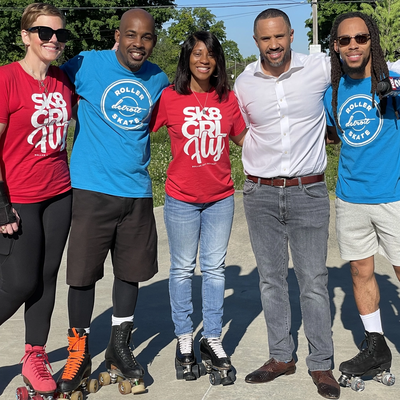
Many of the skaters invited to participate had previously trained through the Roller Skate Detroit program. Walker often tells trainees to stay ready, because opportunities can appear without warning.
This was one of those moments.
The Casting Call
To complete the team, a casting call was organized.
Each skater had about two minutes to demonstrate their style, personality, and ability to interact with people.
Technical skill mattered, but it was not the only factor.
Some skaters are highly skilled but uncomfortable engaging with crowds. Others may not perform advanced tricks but naturally connect with people.
For an activation like the NFL Draft, presence mattered just as much as skill.
The final roster reflected that balance.
A Different Kind of Street Presence
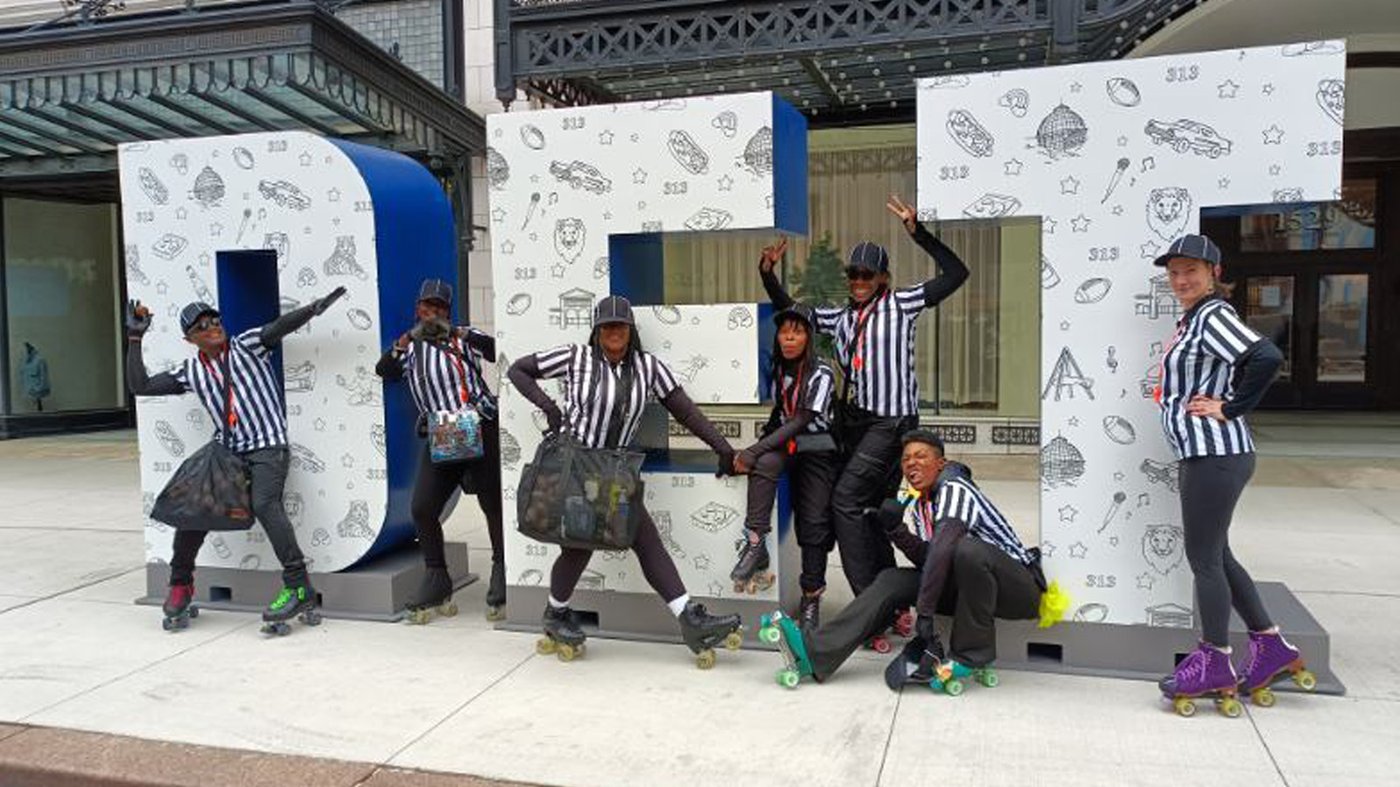
The skaters were dressed as referees.
The choice was intentional.
Months earlier, a controversial officiating call during a Detroit Lions game had dominated local sports conversation. Seeing referees rolling through downtown instantly sparked conversation and laughter from fans.
The skaters carried small footballs, interacted with visitors, and directed people toward the Detroit Shop activation.
But something unexpected started happening.
People stopped walking.
They started dancing.
They shared stories.
Over and over, people said the same thing.
“I used to roller skate.”

I used to roller skate.
Detroit CitizensFinding the Sweet Spot on Woodward
The first two days were an experiment.
At first, the team moved between different parts of the NFL Draft experience, trying to cover as much ground as possible.
Walker spent those early days observing how people moved through the city.
By the second day it became clear that the activation worked best in a concentrated area. The team repositioned along Woodward Avenue between Grand Circus Park and Campus Martius.
That adjustment changed everything.
Crowds were dense. Interaction was constant. The skaters became part of the atmosphere rather than a passing attraction.
Roller Skate Detroit Is So Detroit
Roller Skate Detroit Is So Detroit
By the third day, fans had started repeating a phrase that captured the moment.
“Roller Skate Detroit is so Detroit.”
It revealed something that many residents already understood but rarely said out loud.
Detroit’s culture is often defined by automobiles and Motown music. Yet skating has quietly played an equally powerful role in the city’s identity for generations.
During the Draft, that cultural thread became visible again.
Professional Standards
Running a week-long activation required more than skating ability.
It required structure.
Transportation was organized so participants could park safely at the Ferndale training location before being driven downtown. This avoided the extreme parking costs that came with the Draft crowds.
Each skater was compensated professionally for their work, with shifts ranging from three to fifteen hours depending on availability. For many, it marked one of the first times their skating had been recognized as paid work rather than simply performance.
Maintaining professionalism was also essential.
The team operated under clear expectations for conduct and presentation. When an issue arose that did not meet those standards, it was addressed immediately to protect the integrity of the event and the partnership.
Media Attention
By the third day, the referees on wheels were appearing everywhere.
Local television stations, radio outlets, and social media accounts began sharing videos and photos of the skaters moving through downtown Detroit.
The visibility was not manufactured.
The team was simply doing what they loved while interacting naturally with the public.
That authenticity translated on camera.
Giving Credit Where It Belonged
As attention around the activation grew, some began assuming the effort was organized by the City of Detroit.
Walker made sure to clarify that the opportunity existed because Somerset Collection believed in the concept and invited the team to participate.
A short video was released thanking Somerset and acknowledging their role in bringing the activation to life.
Maintaining that clarity mattered.
Strong partnerships are built on trust.
A Historic Return
The relationship did not end with the Draft.
Later that year, the Somerset team invited Roller Skate Detroit back to participate in the Everything Detroit exhibit inside the mall itself.
It marked another first.
For the first time, roller skaters were performing inside Somerset Collection.
What the Week Represented
For Walker, the most meaningful part of the experience was not the attention or the media coverage.
It was the opportunity.
For decades, many skaters have trained and performed without compensation. They dedicate time, discipline, and creativity to the craft while receiving little more than applause.
The NFL Draft activation showed a different possibility.
With the right structure and leadership, skating can exist not only as recreation but as a professional cultural experience.
And when that happens, the people who have dedicated themselves to the craft can finally be recognized for their work.