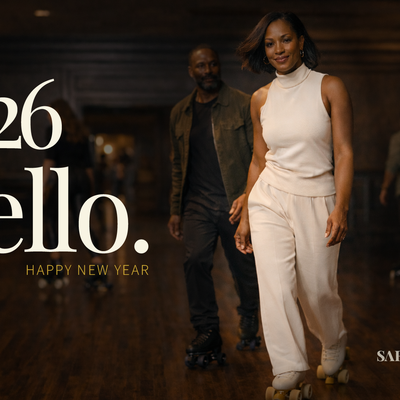
Roller Skating, Detroit, and the People Who Never Left

 Words by
Sarovyn Team
Words by
Sarovyn Team
Skating interrupts that reflex.
The body has to become unfamiliar to itself again before movement becomes fluid.
That is the real beginning.
- Not the wheels.
- Not the music.
- Not the technique.
The willingness to move without needing immediate mastery.
Across Wayne, Oakland, and Macomb County, roller skating has always carried a different kind of cultural weight.
The rest of the country rediscovered it during the pandemic and treated it like a trend. Metro Detroit never stopped. There are skaters throughout Detroit and the surrounding region who have carried the culture for forty years. Some started young and never fully stepped away from it. Others left for a while and returned after careers, marriages, children, exhaustion, grief, or simply the years adulthood quietly takes from people.
But the culture remained.
The skaters who shaped Detroit skating culture were never casual about it. Saturday nights were intentional. The music mattered. The pacing mattered. The clothing mattered. The people who led the session were not announced. Everyone already knew who they were.
The culture moved through recognition, not performance.
That is what most people outside Metro Detroit never fully understood.
Skating here was never only recreation.
It was rhythm.
- Release.
- Precision.
- Social fluency.
- Presence.
People told you who they were without speaking once they started moving.
That culture still exists.
Quietly.
Persistently.
The market usually misunderstands roller skating because it only knows how to package it as nostalgia, fitness, or entertainment. Detroit has always understood it differently. Not dramatic. Not mystical. Just deeply connected to the social rhythm of the city itself.
What has been missing is not the skating.
It has been the environment surrounding it.
Not a family rink squeezing one adult session into the week. Not a beginner lesson dropped into a fitness studio. Not a place where adults feel observed more than supported.
An environment built around how adults actually reconnect with movement.
A place where someone can arrive unsure without feeling exposed.
A place where falling is normal.
A place where different skill levels can exist beside each other naturally.
A place where the music, pacing, and atmosphere allow people to settle into movement instead of rushing through it.
That is what Sarovyn is building in Metro Detroit.
Not just skate training.
A different kind of social environment for adults who have spent too much of life inside spaces that demanded performance before comfort.
Most people do not realize how disconnected they have become from movement until the wheels start rolling again. The body remembers things quietly. Balance. Rhythm. Timing. Coordination. Sometimes even parts of yourself you forgot were still there.
The first few sessions are work.
Then something changes.
The shoulders lower.
The movement softens.
The body stops negotiating with every step.
And somewhere between the first uncertain lap and the moment the stride settles in, a person begins returning to themselves.
For those looking to begin that process, or reconnect with skating after years away from it, we also put together a practical guide covering the foundational side of returning to roller skating as an adult, including equipment, practice environments, timelines, and the core skills that help adults rebuild confidence and consistency on skates in Detroit and across Metro Detroit.